
I’m taking a class in formational theology this semester, and for our midterm we were asked to explore cultural formation. The idea is that we are all being shaped, whether we intend to be or not. The question, then, is: by whom, and into what, are we being shaped or formed? Culture is one force that shapes us, both intentionally and unintentionally. The problem is that until we recognize the different ways culture forms us, we can become unwitting disciples.
We participate in habits and practices we might assume are good or neutral. But when we ask deeper questions, we may find they are shaping us into a version of ourselves that differs from what God intends us to become.
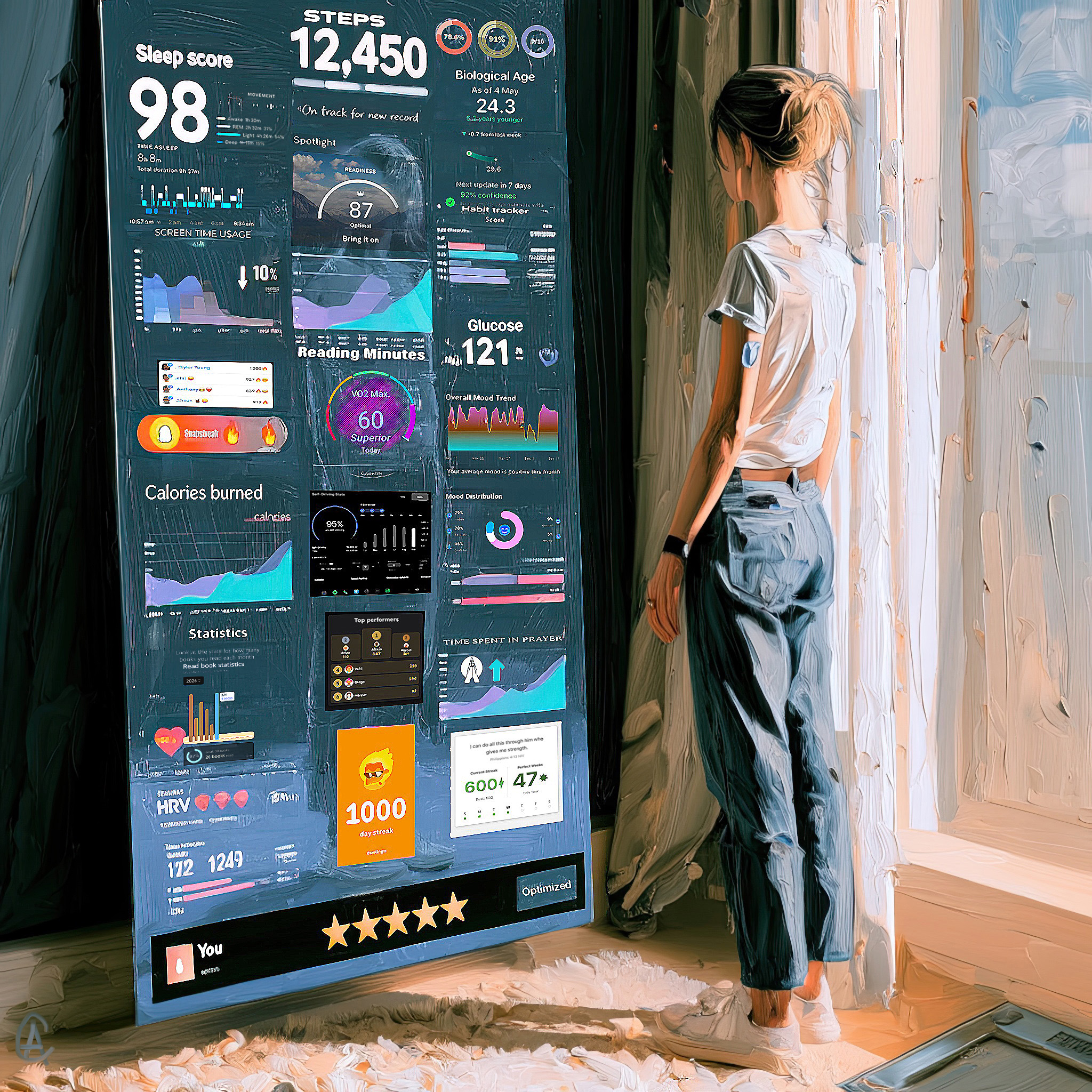
I chose to examine the cultural phenomena of metrification and gamification. Don’t let those words scare you; I think my art piece will make it clear what I mean. We live in a time when data is supreme, and data about personal performance can begin to matter more than our own experience.
People wake up and check their sleep score, letting a number tell them whether they are “ready” for the day or should “take it easy.” Do you feel rested? It doesn’t matter; the number is the truth.
Heart rate, O2 sats, blood pressure, VO2 max, heart rate variability, calories burned, and steps taken; we can measure almost everything. And technology has increasingly turned our habits into games through scores, badges, rankings, and especially streaks.
Our apps now track not only books read, Wordle puzzles solved, and daily meditations but also Duolingo lessons and Snapstreaks with friends. The problem isn’t that what we log is harmful; in fact, these are often good practices that encourage learning, friendship, giving, exercise, and other worthwhile behaviors. The problem is that the metrics can gradually shift the goal. Instead of pursuing health, learning, friendship, or spiritual growth, we begin pursuing optimization itself: continual improvement toward a defined ideal.
There are two problems with this. First, is being the most efficient, consistent, and constantly improving version of ourselves the definition of a flourishing life? Is that what God created us to be? Second, with metrics and games, the ideal can subtly shift from, say, becoming physically fit to maintaining the perfect fitness streak. A perfect “life” becomes perfect streaks, scores, and ratings rather than a life characterized by peace, love, and joy. We begin changing our behavior for the score rather than remembering what the behavior was meant to produce.
For this artwork, I used a mirror to symbolize how we see and define ourselves. The woman’s reflection is obscured by metrics that attempt to define her worth. Almost all of the overlays are real screenshots from apps people use.
This is not to say that metrics or the gamification of behaviors to encourage us to do them are evil. They can be useful tools. The challenge is to recognize what they shape in us, what we allow them to say about who we are, and whether the life they train us to pursue is the one God is actually calling us toward.

Leave a Reply